
Chase County VINELink Coverage
Kansas VINE is the state victim-information and notification service for adults held in participating Kansas county jails. That scope fits a local adult held at Chase County Detention Center. The Attorney General expressly says the service does not include residents of Kansas Department of Corrections prisons. It also is not the locator for BOP, ICE, or U.S. Marshals custody.
This boundary matters in Chase County because the detention center houses local detainees as well as people held for ICE or the U.S. Marshals. A name leaving the county-jail record may reflect community release, transfer, removal, or movement to another custodian. The VINE event reports a jail custody change. It does not establish which legal authority controlled the next step.
Search a Chase County Inmate on VINELink
Start at the official VINELink search. Search one person rather than treating the results as a list of everyone released. A first and last name or offender ID can locate the record. The ID is the safer key when two people share a name.
- Select Kansas and choose the offender or custody search.
- Enter the first and last name, or enter the known offender ID.
- Compare identifiers and the listed facility when several records appear.
- Open the Chase County Detention Center match and read the status in context.
- Write down the offender ID for later calls and alert management.
A person who is still listed should not be described as released. If no match appears, do not infer that release occurred. A spelling issue, delayed feed, transfer, or old record can also explain the result. The broader Chase County released-inmate search paths explain how the sheriff, court, and records-request channels fit together.
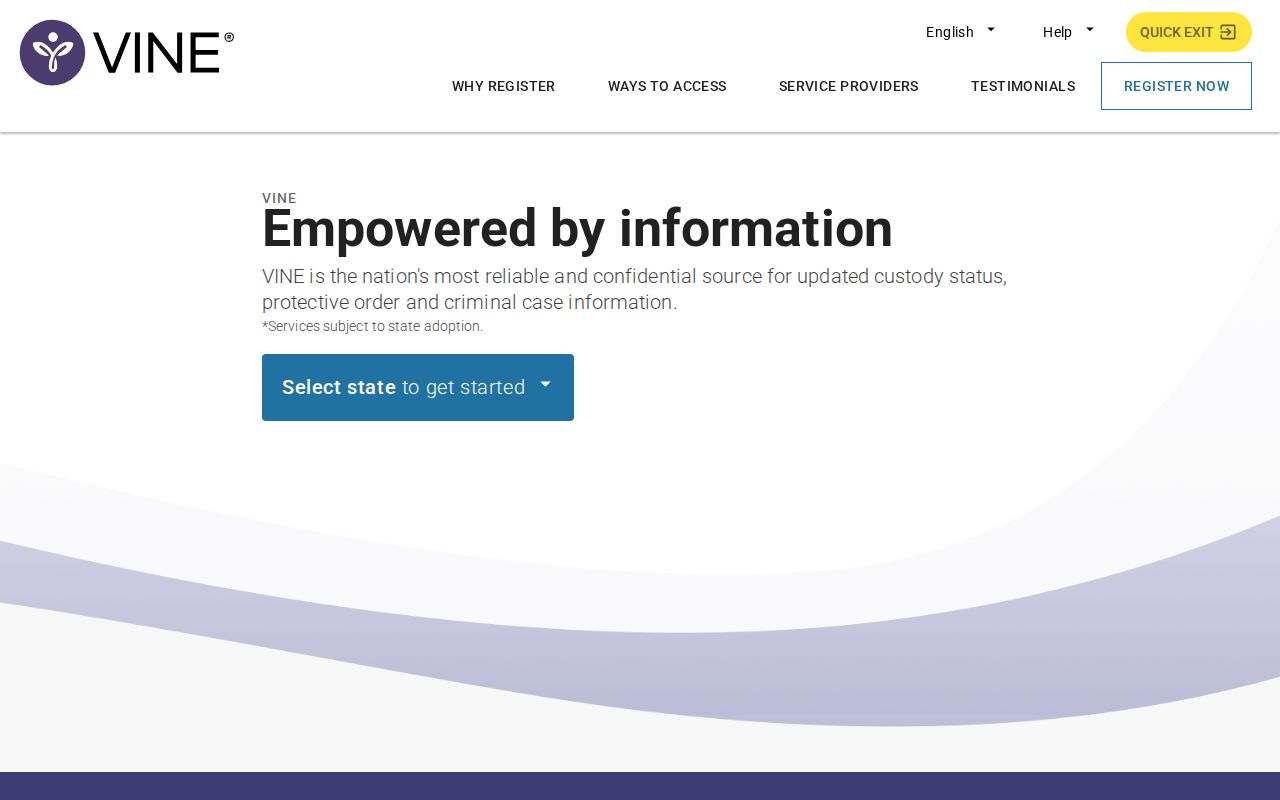
The successful manifest capture below shows the official VINELink entry point. It is a guide to the interface, not proof of any named person's current status.
What a Chase County VINE Record Shows
The public record is designed to identify the person, place the person in a participating facility context, and support notification. It is not the full booking or release sheet. The documented fields and their practical meaning are:
| Field | What it shows |
|---|---|
| Name and identifiers | Details used to separate the intended person from similar names. |
| Custody status | The status most recently reported through the participating jail feed. |
| Facility context | The jail associated with the record, which helps distinguish Chase County custody. |
| Offender ID | The record key to retain for later telephone checks or notification changes. |
| Release or custody-change alert | A report that the jail sent an event, not the full legal reason or destination. |
A release alert does not supply a signed court order, exact release type, or proof that no second custodian took control. For those details, ask Chase County Detention Center and inspect the Chase County court case or request the booking/release sheet.
Register for a Chase County Release Alert
Registration attaches contact methods to one offender record. Complete it while a current Chase County jail match is visible. Available choices may include telephone, text, TTY, email, or app notice.
- Open the correct inmate record and choose the notification option.
- Select each offered channel that is useful and enter accurate contact information.
- Complete the on-screen confirmation and save the offender ID.
- For telephone notice, choose a four-digit PIN and keep it private.
- When an automated call arrives, enter the PIN followed by the pound key to confirm receipt.
- Update the registration if a phone number or email address changes.
The PIN confirms that an automated call was received. It does not verify the inmate's identity, the releasing authority, or whether the event was a transfer. Callers may also use Kansas VINE at 1-866-574-8463, choose a language, enter or spell the name or ID, listen to the status, and register a telephone number.
Confirm a Chase County Release Event
Feed and delivery lag are possible, so treat the alert as a prompt to verify. Call Chase County Detention Center at 620-273-7054 and ask whether the person is presently held and whether the recorded departure was release or transfer. If the reason matters, check the Chase County District Court case for the controlling order. A written county open-record request can seek the existing booking/release sheet, including release time, release or transfer type, releasing authority, and destination if recorded.
For a person committed to KDOC, search KASPER instead. Use KDOC number when known, or narrow a name search with date of birth and other identifiers. A Parole or Discharged result may remain visible after prison custody ends. VINE's lack of a KDOC result is expected and should never be read as evidence of discharge.
Chase County VINE Guidance Layer
Kansas added an “I Need Guidance” feature and a Service Provider Directory in 2026. The Attorney General's VINE update presents them as added navigation beyond basic custody alerts. Early directory coverage may be limited, so a missing listing should not be treated as proof that no local service exists.
This guidance layer does not expand VINE's custody scope. It remains a county-jail notification system, not a KDOC, ICE, BOP, or USMS database. For Chase County, the safest sequence is to identify the custodian first, use the matching official system, and confirm any reported movement with the agency that held the person.
Chase County VINE Telephone Checks
The telephone route is useful when the web search is hard to use or when a registrant wants a voice alert. Call 1-866-574-8463, choose the preferred language, and enter or spell the person's name or enter the offender ID. Listen carefully to the facility and custody status before saving the supplied identifier. The facility context is essential because a shared name can produce more than one possible match.
After selecting the intended record, register the telephone number and choose the four-digit PIN. VINE may call when the participating jail reports release or another custody change. Enter the PIN and pound key during the automated call. If a call is missed, return to the official service with the saved offender ID, then verify the event with Chase County Detention Center. Never rely on caller ID or a partial automated message as the complete release record.
Chase County Custody Systems Compared
Chase County's mixed detention role makes source selection unusually important. A local adult in the county jail can fit Kansas VINE. A state prisoner serving a KDOC sentence belongs in KASPER. A person held under an ICE matter requires the ICE locator and direct agency or facility contact, while a federal sentenced prisoner belongs in the BOP locator. A U.S. Marshals movement may not produce a public person-by-person release result.
| Custody context | Primary official check |
|---|---|
| Chase County jail custody | Kansas VINE plus direct jail confirmation |
| KDOC prison or supervision | KASPER record and KDOC confirmation |
| ICE detention | ICE Online Detainee Locator and ICE or facility contact |
| Federal sentence | BOP Inmate Locator |
| U.S. Marshals custody | Facility, court, and responsible federal authority |
The same person can move between these systems. VINE disappearance after a transfer does not create a KDOC, ICE, or BOP conclusion. Follow the record into the next known custody system and preserve the name, date of birth, booking or offender ID, and court case number used to distinguish the person.
From Chase County Alert to Release Record
A VINE alert answers a narrow question: the participating jail reported a custody event for the registered record. It does not replace an existing government document. When precise proof is needed, request the Chase County booking/release sheet for the full name and date of birth or booking number. Ask for admission and release times, release or transfer type, releasing authority, destination or custodian if recorded, charges, case number, and the booking photograph.
Add an approximate booking window, ask for electronic copies, and request a cost estimate before chargeable work. Chase County's KORA page says a department must respond within three business days by providing the records, stating when and how they will be supplied and at what cost, or explaining why they cannot be produced. That is a response deadline, not a guarantee that final records arrive within the same period.
The district-court chronology can add the legal context. Bond orders, journal entries, disposition, sentencing, dismissal, probation, or revocation may explain why custody changed. Yet a court event does not establish the exact moment the jail completed release processing. Use the alert, jail confirmation, court record, and release sheet for the separate facts each source can prove.
Keep a simple verification log when the event is important. Record the date and time of the VINE message, the offender ID, the facility named in the result, and the public office contacted afterward. Do not add assumptions about where the person went. If the jail says transfer, ask which authority controlled the movement and which official locator or records office should be used next. If the jail confirms community release, ask whether an existing release sheet identifies the release type and releasing authority.
This method also helps when names are similar. Match more than a name before attaching an alert or requesting a record. A date of birth, booking number, offender ID, physical identifiers, facility, and court case can separate two people. VINE provides a prompt, while the underlying jail and court records supply the facts needed to explain the custody change with care.
Search Public Records
Sponsored Results