
No Chase County Three-Day Feed
No official Chase County seventy-two-hour release feed or three-day archive was located in the county, sheriff, or detention-center sources reviewed in July 2026. The sheriff provides a current inmate roster, but there is no public “released” control, published archive span, field list, update cadence, or retention promise. A three-day page must therefore begin with the records route, not an invented feed.
The visible “Books 24hr” control on the BlueHorse roster is narrower and has a different purpose. It displays bookings, not releases. Public past-inmate access is disabled in Chase County’s configuration. If a profile drops away during a weekend, the change may reflect community release, an agency transfer, lag, or simple removal from the public display. Ask the jail what happened and request the existing record.
Check Chase County Three-Day Releases
The best method uses a precise start and end date. A window can be defined as three calendar dates or as the prior seventy-two hours, but the request should state which meaning is intended. Include identifiers so staff do not have to guess among similar names. Ask for an existing booking/release sheet rather than asking the records custodian to answer a broad research question.
- Write down the exact beginning and ending date and time for the period being checked.
- Review the current sheriff roster only to see who is listed now. Do not treat absence as release.
- Call Chase County Detention Center at 620-273-7054 and ask whether the named person is held or left by release or transfer.
- Submit a Chase County KORA request for booking/release sheets within the stated range, using a full name and other known identifiers.
- Review the district-court case for the signed order or disposition that may explain a bond, dismissal, probation, sentence, or revocation.
- Use a saved VINE alert for corroboration, then follow KDOC, ICE, USMS, or BOP if the person moved into another custody system.
For just the current day, the Chase County same-day release check keeps the inquiry narrow. The wider span is more useful when the event time is uncertain or when offices and electronic systems did not update together.
Note: Ask for electronic copies and a cost estimate before chargeable work, especially when the date range includes many bookings.
Chase County Three-Day Fields
Chase County publishes no field set for a seventy-two-hour release product because no such product was found. A narrowly drafted request can still seek the information that makes each departure useful and verifiable. Some fields may not exist in every record, and the county’s exact internal release-code dictionary was not verified.
| Requested field | Why it matters across three days |
|---|---|
| Full name and booking number | Separates people and custody episodes within the range. |
| Admission date and time | Shows whether the booking began before the requested span. |
| Release date and time | Places the processed departure inside or outside the window. |
| Release or transfer type | Helps distinguish community release from another custody move. |
| Releasing authority | Points to the court or agency that controlled the event. |
| Destination or next custodian | Supports follow-up when the person did not enter the community. |
| Charges and case number | Connects the jail record with the relevant court disposition. |
The release sheet answers when staff processed the person out of Chase County custody. The court file answers why a legal change may have been authorized. A bond order, dismissal, sentence, or probation entry may explain the basis, but it does not show the exact physical departure minute. A later hold can change the result.
Chase County Weekend Lag
A three-day window often matters because it can bridge Friday through Monday or cross a holiday. Chase County has not published a special weekend-release rule, a routine lobby-exit hour, or a roster-refresh schedule. The sheriff’s office is staffed around the clock, but that fact does not establish when a specific release will be processed or when a public display will change.
KASPER adds a separate timing issue for people in Kansas Department of Corrections records. KDOC says the system refreshes on working days, so a weekend event may not appear at once. Yet KASPER does not fill the local archive gap for someone who left Chase County custody and never entered KDOC. Kansas VINE may also have agency-feed or delivery delay. Use time-sensitive tools as notice, then obtain the source record.
Note: A three-day request should include both boundary times so midnight does not silently omit a late release.
Chase County Court Context
The Chase County District Court source provides the local route for case and clerk information used to explain a custody change.
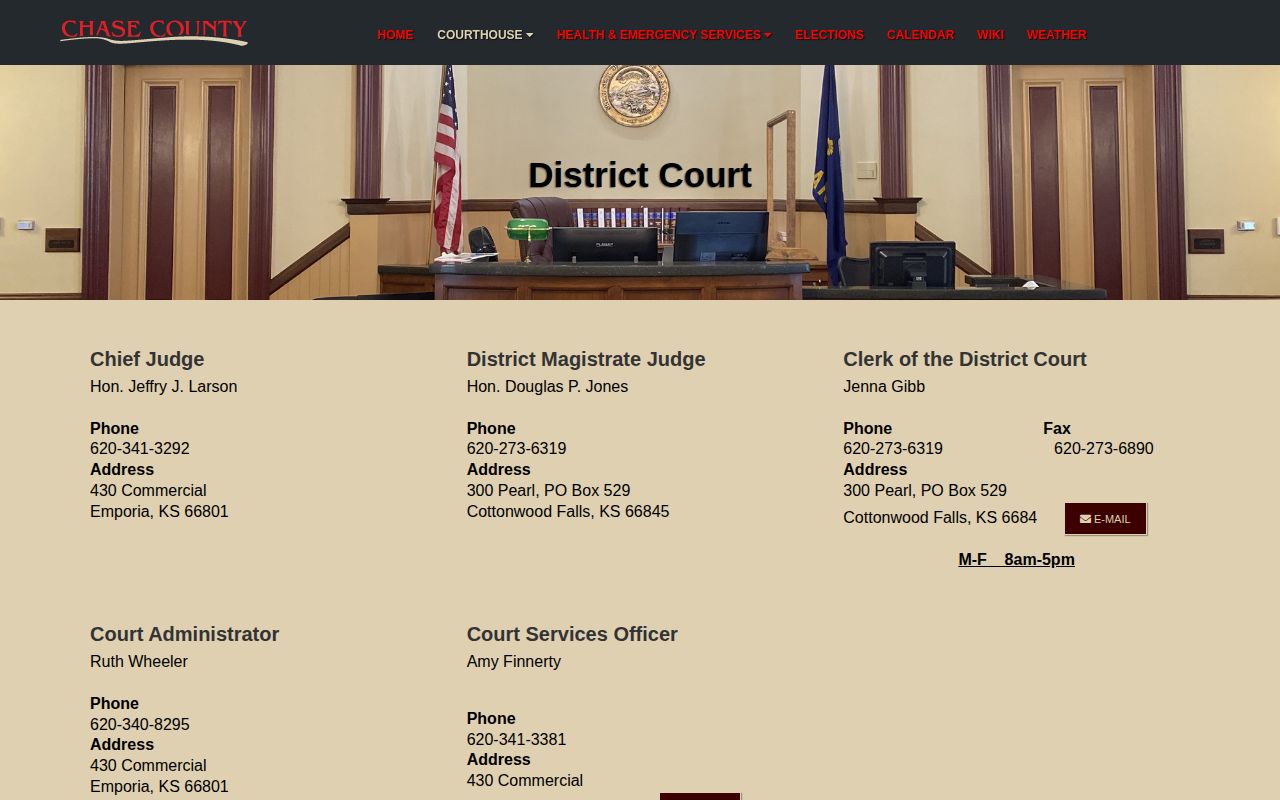
The court source can lead to a signed bond order, dismissal, journal entry, sentence, probation order, or revocation. Its record is not a jail release log. A court direction can authorize release, while staff still must check other warrants or detainers and finish processing. Match the case number to the jail sheet before treating the two records as one event.
The Fifth Judicial District’s Chase docket is updated daily and generally spans about a month, but it is subject to change. It can help locate a hearing. It does not state the final physical-release moment. When the docket is unclear, contact the clerk and seek the signed entry rather than inferring the result from a hearing label.
Chase County Release or Transfer
Chase County Detention Center serves more than one custody context. It holds local detainees and also operates under ICE and U.S. Marshals arrangements. A departure during the three-day range could be a community release, return to a surrounding county, transfer to KDOC, ICE removal or transfer, or federal movement. The roster alone cannot sort those outcomes.
| Custody context | Useful source | Limit |
|---|---|---|
| Chase County jail | CCDC release sheet and court order | Public live roster is not a history |
| KDOC sentence | KASPER status and movements | Does not cover local-only release |
| ICE detention | ODLS and direct ICE or facility contact | ODLS is current custody, not an archive |
| USMS custody | Federal docket and agency or facility contact | No public released-person locator like BOP |
| BOP custody | BOP Inmate Locator | Past date proves release from BOP only |
For a person who is still on the live Chase County roster, report current listing rather than release. For someone absent, request the local record and follow the destination. A KASPER “Parole” status indicates prison release with state supervision still active. “Discharged” means the KDOC obligation ended. Those state labels do not describe a local bond release.
Chase County Archive Substitute
BlueHorse’s disabled public past-inmate function is the key local data quirk. There is no supported claim that a released profile remains for a set number of hours or days. Roster disappearance should therefore trigger a record request, not a conclusion. Ask for the booking/release sheet, release or transfer type, releasing authority, destination if recorded, and the linked booking photograph when needed for identity.
The county KORA page states that a department must respond within three business days by providing the records, stating when and how they will be provided and at what cost, or explaining why they cannot be provided. That is a response deadline. It is not a promise that final production will be complete within the same span. A request covering a weekend may also reach the office after the custody events have already occurred.
Confirm Chase County Release Records
Read dates and labels with care. A booking date is not a release date. Bond posting is not always the lobby-exit time. A transfer date proves departure from one facility but not community release. A VINE event may arrive after the agency update. The most persuasive result combines the Chase County release sheet with the court or controlling-agency record.
When no public result appears, that silence is not proof of no event. Check spelling and identifiers, call the facility, and follow the destination named in the record. For a broader named-person search across county, state, and federal systems, use the Chase County released-inmate lookup. Keep each source tied to the custody it actually covers.
Note: For common names, compare date of birth, booking or agency number, case number, and physical identifiers before joining records.
Search Public Records
Sponsored Results