
Chase Detention Center Release Paths
Chase County Detention Center, also called Chase County Jail, is the only verified detention facility in the county. Local detainees may leave on bond, court order, dismissal, time served, or sentence completion. Some leave because another custodian takes control. A Kansas Department of Corrections commitment is a transfer to state custody, not a final release. ICE and U.S. Marshals departures may mean federal movement, removal, a return to another jurisdiction, or community release under that agency's authority.
The release sheet is the best first record because it can join a departure time to the release or transfer type and the controlling authority. A signed Chase County court order explains a local legal event. KASPER supplies dated movements and status for a KDOC commitment. ICE, USMS, and BOP records have narrower federal roles. No single source proves that no other agency has custody or supervision.
| Departure | Record to check next |
|---|---|
| Bond, dismissal, time served, local completion | CCDC release sheet and Fifth Judicial District case |
| KDOC commitment | KASPER state movements and status |
| ICE custody | ICE Online Detainee Locator and ICE field office |
| USMS custody | USMS or the receiving federal facility |
Confirm Chase Detention Center Releases
The sheriff's BlueHorse page is a live roster. Its “Books 24hr” option is a booking filter, not a release list, and Chase County disabled public past-inmate access when the system was reviewed. A missing name is a useful prompt to investigate, not a finding that the person returned to the community.
- Search the current roster and note whether the person is still listed. Record the exact name and any available booking identifier.
- Call CCDC at 620-273-7054 and ask whether the person left by release or transfer. Supply a date of birth, booking number, or case number when available.
- Request the existing booking and release sheet with admission time, departure time, release or transfer type, authority, and destination.
- Check the Chase County court chronology for bond, dismissal, sentence, revocation, or a signed release order.
- Follow the receiving agency named in the record. Use KASPER for KDOC, ICE tools for immigration custody, and the appropriate federal authority for USMS or BOP movement.
The full Chase County released inmate search compares county, state, court, VINE, and federal records. Use stable identifiers across systems, especially for common names.
Chase Detention Center Release Records
Ask for an existing record rather than asking the custodian to answer a broad question. A useful request names the person, date of birth or booking number, and approximate booking window. It then identifies the booking and release sheet fields needed: admission date and time, release date and time, release or transfer type, releasing authority, destination if recorded, charges, case number, and booking photograph. Ask for electronic copies and a cost estimate before chargeable work. No published flat release-sheet fee or retention interval was found.
Chase County Detention Center301 S. Walnut
P.O. Box 639
Cottonwood Falls, KS 66845
Phone: 620-273-7054
Fax: 620-273-7076
Email: ccdc@chasecountyks.com
The sheriff's general office says it is open 24 hours a day, seven days a week. That statement should not be extended to promise round-the-clock records processing, property release, or administrative service. Call before visiting. The county clerk's KORA page and form explain that an agency must respond within three business days by providing records, stating when and how they will be supplied and at what cost, or giving a reason they cannot be provided. This is a response rule, not a final-production guarantee.
Chase Detention Center Custody Roles
Chase County owns and operates the facility through the sheriff's office. County sources use both “Detention Center” and “Jail.” ICE lists the same Walnut Street location as Chase County Jail and describes a contract detention role. The building can therefore contain local detainees, ICE detainees, and people held under U.S. Marshals authority. It should not be treated as a dedicated state prison or a BOP institution.
A local conviction can send a person to KDOC, but Chase County has no state prison. The KASPER facility then shown may be elsewhere in Kansas. “Conviction County: Chase” identifies the court that imposed the conviction; it does not identify the present location or a return destination. In the federal context, an ICE or USMS movement may occur without producing a local community-release record.
The official ICE detention directory provides the source view shown below. The image supports the mixed-custody context, while the current directory should be checked for the latest federal listing.
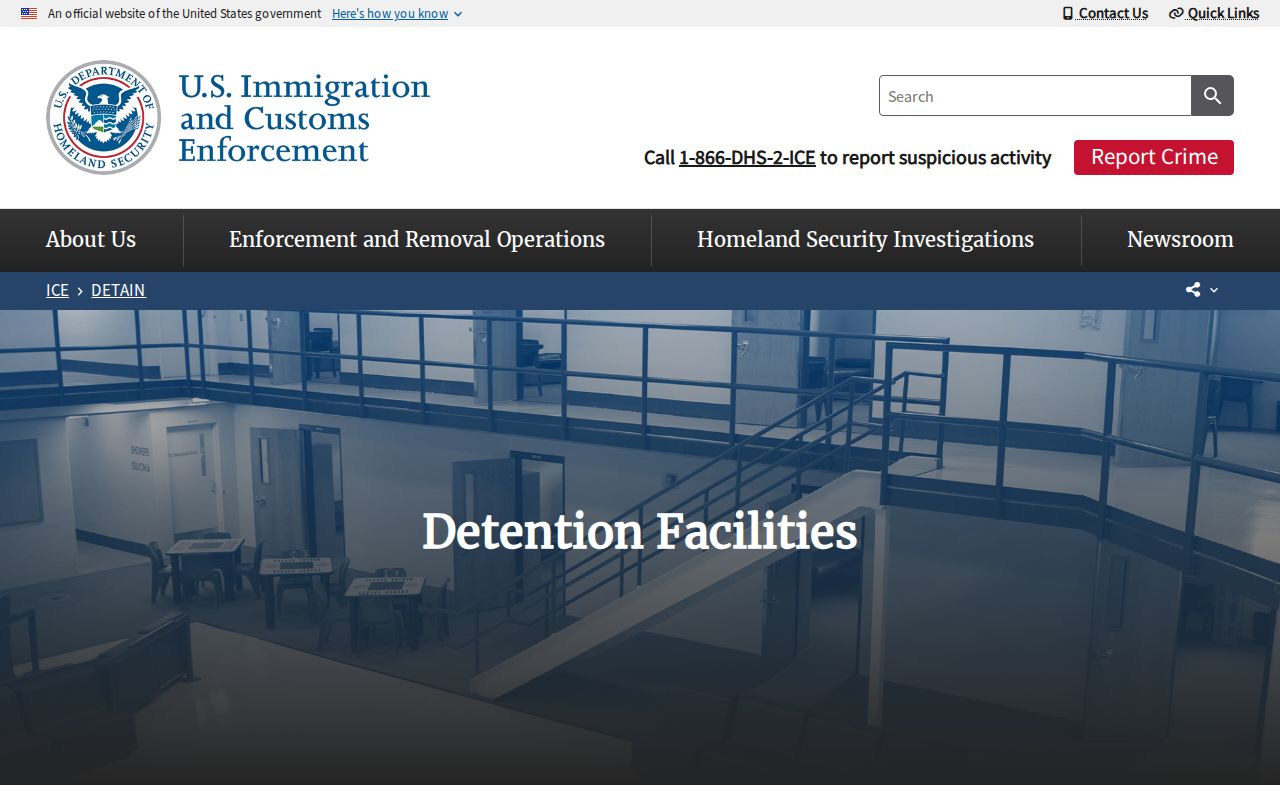
The listing does not, by itself, state where a particular person went. Individual confirmation still comes from the controlling agency and the person's record.
Why Chase Roster Removal Is Ambiguous
Mixed custody is the most distinctive fact about this jail. A local defendant may depart through the lobby after bond and holds clear. An ICE detainee may be removed or transferred. A USMS prisoner may move to court, another contract jail, or a federal institution. Each event removes a person from the same building, but only one may be an ordinary local community release.
Keep the unit of proof clear. The CCDC sheet establishes departure from CCDC. KASPER establishes KDOC status. ICE's locator addresses current immigration detention. The court establishes a legal order. BOP establishes BOP status. When the release sheet says farm-out, detainer, hold, transfer, or another custodian, follow that trail before describing the person as released to the community.
Federal contract records add context, but they are not person-specific release lists. ICE inspection materials describe the Chase County site as county owned and operated, with immigration detention handled there by agreement. The U.S. Marshals Service likewise explains prisoner movement through its own custody process. These sources establish why a federal transfer is plausible. They do not replace the named detainee's departure record. Match the date, agency number, case number, and receiving authority before linking a federal movement to a Chase County roster change.
Chase Bond Release Through Lobby
CCDC's published bond process distinguishes own-recognizance, cash, cash-or-surety, and cash-only bonds. For a Fifth Judicial District cash bond, the facility calls for the full amount in United States currency, government identification in the lobby, an identification copy, and a receipt. When an outside agency controls the hold, that agency must accept its own bond and notify CCDC.
Staff check for other holds before an eligible person exits through the lobby doors. This sequence explains why bond payment and physical departure can carry different times. No standard release hour, weekend schedule, or holiday timetable was published. Call the jail rather than promising a pickup time, and use the later release-sheet entry to document the actual departure.
Chase Release Alerts and Court Proof
Kansas VINE covers participating county-jail custody and can corroborate a CCDC custody change. It does not cover KDOC prison residents, ICE, BOP, or USMS custody. A VINE alert may omit the legal reason and may not identify a later custodian. Register against the correct individual, retain the offender ID, and confirm the alert with CCDC and the court.
The Fifth Judicial District's Chase docket is updated daily but covers only a short future span and can change. It is a planning aid, not disposition proof. Search the case chronology and obtain the signed order from the clerk. If the order precedes the jail departure, report both times. Processing and unresolved holds can intervene.
Property After Chase Facility Release
CCDC states that approved original personal mail is placed with the person's property for access after release. A transfer changes the practical result. Receiving-facility rules, return fees, or disposal policies may apply, so leaving CCDC does not guarantee that property is ready for ordinary pickup.
Ask CCDC about the specific property record and whether the event was a release or transfer. Written data-accuracy complaints may be directed to the detention center at 301 S. Walnut. Do not use a property pickup assumption as proof that someone entered the community.
Search Public Records
Sponsored Results